
Ancient Manuscripts
How They Help With Our Health
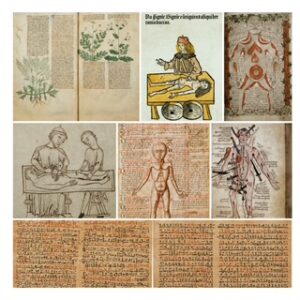
How Ancient Manuscripts Help With Our Health
An ancient manuscript is deemed any hand written document written before 1439. After this date printing was discovered in Germany with the Gutenberg bible being produced in 1445. East Asia saw the first innovative woodblock printing in the 8th century. Many of these hand written ancient manuscripts wrote extensively about medicine including the techniques they used during surgical procedures. In the Egyptian ancient manuscript known as the Edwin Smith Papyrus (c. 1600BCE) the author described the forty eight surgical procedures in detail discussing the wounds, fractured bones and many other details concerned the condition of the patient having surgery. This helped medics to understand that fact-based evidence of physical conditions under observation through examination of a person was more helpful in healing than previous notions of magical and religious healing. Disease and ailments were deemed to be from angry Gods and unnatural forces and spells were given in the form of magic prayers to deter these wicked spirits that were making a person unwell along with herbal remedies which acted as part of the magic.
These ancient hand written records these fundamentally shaped surgery today by creating the conceptual model governing surgery and by providing surgical drugs that are manufactured using foundational chemical components known as active pharmaceutical ingredients (APIs) and chemical intermediates. The 48 surgeries that were detailed were done using the title, the examination, the diagnosis, the prognosis and the treatment. All doctors use this sequence in the modern world. This has helped keep us healthier as medics no longer rely on magical and religious healing to cure us of our ills.
The ancient manuscript Kahun Gynaecological Papyrus which was hand written in 1825 BCE contains 34 clinical cases and details the symptoms, diagnoses, and non-surgical treatments for gynaecological problems including obstetric and midwifery. This helps doctors understand medical issues that women face and how they were treated. The manuscript detailed issues with severe period pain and identifying and treating the issues of a prolapse. Doctors gain a great understanding from medical books that have since been written about women’s health and from this very early ancient manuscript. Methods of fixing problems like a prolapse have changed for example. Women no longer stand over a fire whilst herbal remedies are used to smoke the prolapse back into place as ancient Egyptians believed this would force it back into place.
The ancient Egyptian manuscript known as the Ebers Papyrus dating 1550 BCE discusses how willow bark is used as an anti-inflammatory and myrtle bark as pain relief. These two plants contain a natural compound called salicin which needs to be broken down by the liver and stomach before it works. This was later turned into a synthetical element and is used for instant pain relief in tablets like aspirin. Many ancient manuscripts brought the early knowledge of pain relief that were developed my pharmaceutical companies to those of what we take toady for our ailments.
The Chinese herbal medicine we know today has mainly derived from the ancient manuscript Shen Nong Ben Cao Jing (c. 200 BCE). This manuscript details 365 plant based, mineral, and animal drugs which he tested over 365 days and his results were the how the mixing of various herbs helped with certain ailments and conditions. Many people today choose to take the herbal route for many conditions and it was ancient manuscripts like this one which taught future herbalists the knowledge and understanding of the plants that form the basis of modern herbal medicines.
The English ancient manuscript Bald’s Leechbook (c. 900 CE) contains practical, regional cures using local herbs like garlic and leeks. One of the writings was about an eye salve which helped cure bacterial eye infections. It was later discovered that this also kills modern antibiotic-resistant bacteria such as the superbug MRSA. By utilising text-mining algorithms and laboratory testing on medieval manuscripts, top UK universities collaborate with healthcare researchers to extract ancient antimicrobial recipes that can combat modern, antibiotic-resistant superbugs. See the report Datamining medieval medical texts for modern medicines by UK Research and Innovation (UKRI).
Ancient manuscripts showed the medical profession today how to stitch and bandage wounds. They revealed how to hold the skin together when about to stitch to minimise scarring, keep out infection and to heal quicker. By mapping the heart’s vascular connections, recognising that head trauma causes full-body paralysis, and implementing strict infection quarantines, ancient medical manuscripts effectively laid the groundwork for modern cardiology, neurology, and public health systems. By anchoring modern medicine in the logical principles established by ancient manuscripts, today’s scientists have replaced primitive, hands-on diagnostics with molecular engineering, sterile robotics, and genetic sequencing to treat the human body from the inside out.
- Dedicated research teams within the medical profession bridge the gap between historical texts and the laboratory bench.
- They scan ancient recipes, identify the specific plants or remedies mentioned, and use advanced biochemical testing to isolate the exact molecules responsible for healing.
- Medical researchers routinely collaborate with historians to explore traditional medical systems. By studying how ancient healers used indigenous plants, pharmaceutical companies can skip the random trial-and-error phase of drug development, dramatically speeding up the timeline for creating new antibiotics, antivirals, and pain medications.
- The modern medical profession is increasingly validating what ancient texts preached for millennia: the crucial link between lifestyle and physical health. Modern fields like lifestyle medicine and psychoneuroimmunology are actively researching how ancient practices, such as structured sleep, specific diets, and mindfulness, physically alter our immune and nervous systems.
With much research that has been gleaned from these ancient manuscripts, in all fields of medical science, medics of the future will continue being inspired and learn from them to improve our health. Early human clinical logic and localised empirical trials reached an extraordinary zenith within ancient medical manuscripts, which perfectly captured the foundational brilliance of systemic scientific observation. By integrating ancient clinical triage, pharmacology, and ethical codes with modern bioprospecting, AI data-mining, and paleopathology (ancient diseases), these historical medical manuscripts continue to transform from repositories of early scientific logic into active frontiers for contemporary drug discovery and evolutionary health and will continue for thousands of years to come.