Marc Chagall Bibles

Why Are They Are So Sought After?

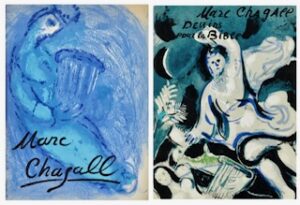
Marc Chagall Bibles. Illustrations for the bible and Drawings for the bible

Why Are Marc Chagall’s Bibles So Sought After?

Marc Chagall’s bibles are so sought after because they stand as monuments in art history because they represent a deeply personal twenty-five-year obsession that survived the horrors of the Second World War. When the legendary French art dealer Ambroise Vollard commissioned the project in 1931, Chagall refused to draw from mere imagination. Instead, he travelled directly to Palestine, Syria, and Egypt to immerse himself in the light, the landscapes, and the ancient heritage of the Old Testament. As a Hasidic Jew who had to flee Nazi-occupied Europe, Chagall infused these plates with a profound sense of human resilience, sorrow, and spiritual joy, turning the biblical narrative into a vivid dreamscape of his own cultural identity.
 
The physical creation of the book is equally legendary, produced at the famous Atelier Mourlot in Paris, which was the epicentre of mid-century printmaking for masters like Picasso and Matisse. Rather than using modern mechanical printing presses to copy paintings, Chagall hand-drew his designs directly onto heavy limestone slabs, utilising a separate stone for every single layer of ink. This meticulous process means that every sheet bound inside the publication is not a reproduction, but a genuine, original lithograph carrying incredible depth of colour.
 
By publishing these masterpieces within the landmark arts review Verve, the visionary publisher Teriade did something revolutionary for the 1950s art market. He effectively democratised fine art by bound-in master prints, allowing everyday writers, collectors, and art lovers to own a piece of museum-grade modernism that would otherwise be locked away in exclusive private portfolios.
 
The historic allure of Verve rests on the fact that the visionary publisher E. Teriade completely redefined the boundaries of mid-century print media. He transformed a standard quarterly review into a lavish, grand-format showcase for the absolute heights of European modernism. By rejecting cheap commercial inks and high-speed mechanical presses, Teriade ensured that every issue was a luxury production, printed by the master craftsmen of the legendary Atelier Mourlot in Paris.
What makes these volumes so intensely collectable today is that they represent an unprecedented, lightning-in-a-bottle convergence of twentieth-century genius. Within the same covers, readers encountered pristine, original lithographs drawn directly onto limestone blocks by titans like Pablo Picasso, Henri Matisse, and Joan Miro, juxtaposed with avant-garde prose from literary giants such as Albert Camus and Jean-Paul Sartre. It was an elite, museum-grade art gallery bound into a literary journal, providing the public with direct access to the European avant-garde during an era before global art exhibitions were common.
 
I just love the pure sensory experience of the looking at Chagall’s bibles. To me possessing an original volume provides an immediate tactile connection to the peak of mid-century French printmaking. Turning these heavy pages lets you experience the incredible ink density and velvety texture of genuine lithography, far removed from the cold, flat surface of a modern digital screen or mechanical reproduction. The brilliant primary yellows, deep celestial blues, and vibrant crimson inks applied by the master printers at Atelier Mourlot possess an almost three-dimensional quality that catches the ambient room light differently at every angle.
 
I feel like I am a guardian of art history and I feel an immense intellectual pride in acting as the custodian of an intact piece of twentieth-century publishing history. As art dealers have systematically dismantled and broken apart thousands of these books over the last seven decades to frame the plates individually, keeping a complete volume seems like a quiet act of historical preservation. You possess a preserved mid-century time capsule exactly as Chagall, the publisher Teriade, and the writers of the post-war European avant-garde intended it to be experienced.
 
Owning this beautifully illustrated book with original lithographs offers a personal, private portal into Chagall’s spiritual landscape and his twenty-five-year obsession with his cultural identity. You can study the raw line work, the minor stone textures, and the sweeping forms up close in your own home, discovering small visual secrets that are completely lost in textbooks. It provides a rare sense of quiet intimacy with a modernist master, transforming a simple shelf of books into a museum-grade sanctuary of human resilience, memory, and artistic triumph.
 
I am aware that as art dealers have systematically dismantled these books over the last seven decades to sell the individual prints for framing, intact first-edition volumes are increasingly rare. The survival of a complete book is prized by collectors like myself. These two bibles represent a preserved time capsule of mid-century graphic art history of which art lovers, like me, want to own. The two versions of Chagall’s bibles are highly sought after for their original lithographic plates. Below is the list of colour plates with brief details about each one and why some of them appeal to me.
A copy of Verve 33/34 Chagall Bible

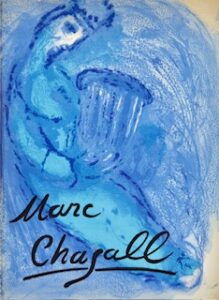
The 1956 Chagall Bible: Illustrations for the Bible

This volume, was published in French and English and is titled Illustrations pour la Bible (French) and Illustrations for the Bible (English). It was published in 1956 by Verve, Number 33/34. It was distributed by Zwemmer for Great Britain and Harcourt Brace for the USA. Marc Chagall’s bible contains a total of thirty original lithographs. Within this allocation, sixteen are vibrant full colour lithographs which are made up of fourteen major narrative internal plates, one specially designed title page, and the main front cover artwork. Balancing these out are twelve original black and white lithographs that are frequently printed directly onto the reverse side of the colour sheets to preserve the structure of the book layout. The remaining two lithographic compositions are utilised externally to form the decorative back cover and the spine wrap of the bound volume. It is worth noting that this 1956 book also houses an additional one hundred and five monochromatic heliogravure reproductions which display Chagall’s separate master etching series. The original colour lithographs are as follows:-

The Angel
The majestic composition of this opening plate introduces the spiritual world as an overarching presence in human destiny. Chagall utilises vibrant, celestial yellow and blue inks to frame the heavenly messenger as a comforting guardian over humanity. The flowing lines of the angel’s wings create a dynamic sense of motion that sweeps across the entire page. This particular print sets the dreamy, supernatural tone that defines the visual language of the entire publication. By placing the figure high above a miniature landscape, the artist emphasises the vast scale of the divine realm. I love this lithograph for its iconic angel composition which captures the peak of Chagall’s spiritual expression, seamlessly blending raw celestial majesty with a deeply personal palette of glowing, rich blues.
 
The Angel with a Sword
A stark theological shift occurs in this dramatic plate, which represents the harsh reality of divine judgement. The composition relies on sharp, aggressive sweeps of colour to illustrate the absolute authority of the heavenly decree. The fiery red and deep black tones convey a sense of urgent peril and the permanent loss of innocence. Humanity is shown fleeing in terror from the sweeping blade that cuts through the physical canvas. It serves as a powerful visual manifestation of the painful expulsion from the garden of Eden and boldly trades Chagall’s signature whimsical romance for a stark, dramatic manifestation of apocalyptic power.
 
The Angel of Paradise

Chagall deliberately floods the entire canvas with shimmering fields of emerald green and radiant celestial yellows to evoke the timeless, fertile beauty of a paradise that is now permanently closed to mankind. The heavenly guardian dominates the centre of the sheet, its grand, sweeping wings cutting across the sky with a fluid elegance that feels both incredibly graceful and completely unyielding. Rather than displaying anger, the angel’s face is rendered with a deep, sorrowful tranquillity, reflecting a profound cosmic grief over the necessary separation between heaven and earth. The entire print radiates a hauntingly beautiful atmosphere of loss, using soft, masterfully blended lithographic inks to capture the precise, melancholy moment when innocence transforms into human history. This lithograph beautifully portrays the delicate, fluid figures of Adam and Eve emerging within a serene visual sanctuary under the angel’s protective watch.

Abraham and Sarah
Chagall shifts his focus toward quiet intimacy and an improbable future in this domestic scene. The elderly patriarch and his wife are enveloped in warm, earthy tones that emphasise their advanced age and vulnerability. Their close, leaning postures reflect a lifetime of shared trials and profound mutual reliance. In the background, a subtle celestial presence hints at the transformative divine promise of a new nation. The print stands out for its deep emotional tenderness rather than grand, sweeping dramatic action.
 
Moses Receives the Tablets of the Law
The composition captures the precise cosmological boundary line where human history intersects directly with the eternal realm. Chagall rejects standard historical realism by wrapping the entire upper canvas in an ethereal, shifting vortex of emerald green and deep celestial blues. Out from this swirling storm of ink, a glowing, oversized hand emerges seamlessly from the clouds to offer the stone commandments to the waiting prophet below. Moses stands at the absolute base of the plate, his face illuminated by a brilliant, internal spiritual light as he reaches upward with trembling hands to receive the sacred law. The entire image vibrates with a quiet, holy reverence, focusing on the psychological vulnerability of a mortal man acting as the physical bridge between heaven and earth.
 
Moses with the Tablets of the Law 1
The structural evolution of divine law is captured in this intense, striking portrait of the great prophet. Moses is completely enveloped in a blazing, crimson aura that signifies the terrifying power of his encounter with the divine. He holds the heavy stone tablets aloft with an expression of immense gravity and spiritual focus. Swirling clouds of ink surround the peak of Mount Sinai to isolate him from the mundane world below. The entire composition vibrates with the heavy, transformative weight of carrying the Ten Commandments to humanity.
 
Moses with the Tablets of the Law 2
The secondary variation titled shifts the visual perspective entirely by focusing on the intense psychological and physical transformation of the prophet following his direct encounter with the divine. Rather than highlighting the wide, open sky, Chagall closes the frame down around Moses, drowning the background in rich, contrasting shadows to enhance the dramatic tension of the solitary mountain peak. The prophet’s face is split by a striking contrast of intense light and deep shade, beautifully visualising the immense spiritual burden of carrying absolute moral law to an imperfect world. The stone tablets themselves are rendered with powerful, blocky strokes of colour that dominate the upper half of the sheet, making the commandments feel like an unyielding, monumental weight. Every line across the prophet’s face and hands conveys a deep sense of exhausting awe, proving that standing in the presence of the infinite alters a human being forever.
 
Moses with the Tablets of the Law 3
Chagall rejects the atmospheric chaos of the earlier variations, opting instead to structure the composition around the heavy, blocky outlines of the twin stone tablets which rise like monolithic towers over the landscape. The prophet is shown holding the divine text with a sense of rock-solid, grounded stability, his figure merging seamlessly with the dense textures of the stone to signify that he has become the permanent embodiment of the law. A stark, dramatic colour palette emphasises the absolute, uncompromising nature of the covenant, stripping away soft decorative details to leave only the raw, foundational power of the sacred decrees. The entire print radiates an overwhelming atmosphere of enduring permanence, beautifully capturing the precise moment when a fleeting spiritual vision is etched forever into the physical history of mankind.

David with his Harp
The artistic and musical heart of the Old Testament is celebrated in this deeply serene portrait. The shepherd king is bathed in tranquil, melodic blue washes that mirror the soothing power of his music. A floating crown hovers gently above his head to signify his future royal destiny while he remains focused on his instrument. The lines of the harp merge seamlessly with David’s own form to show total artistic immersion. It highlights Chagall’s belief that creative art and spiritual praise can heal a fractured human soul.
 
David Mourning Absalom
This emotionally heavy print strips away the courtly music and replaces it with the raw agony of grief. The composition utilises weeping, chaotic figures and distorted perspectives to capture a profound sense of personal ruin. Dark, melancholy ink tones dominate the sheet to reflect the heavy psychological shadow of family betrayal. King David is shown crumpled in sorrow, completely unconcerned with his royal status or political power. It stands as a universal, devastating depiction of a father mourning the tragic death of a rebellious child.
 
David and Bathsheba
The complicated intersection of human desire, royal power, and ultimate guilt is masterfully explored here. The lithograph interlaces deep crimson reds and midnight blues to symbolise the dangerous allure of forbidden romance. The two figures are drawn in a close, swirling embrace that feels both intimate and heavily ominous. High above them, a watchful eye or angelic presence hints at the inevitable divine judgement to come. The entire image captures the tense, secretive atmosphere of a choice that would alter the course of Israel’s history.
 
Solomon
The transition of royal power is marked by this majestic, deeply meditative portrayal of the legendary king. Solomon is seated upon his throne, enveloped in rich emerald greens and brilliant gold tones that signify immense wealth. Rather than focusing on superficial opulence, Chagall depicts the young ruler with his eyes closed in deep, silent thought. His posture suggests that the true burden of leadership lies in acquiring inner spiritual wisdom rather than enforcing military might. The geometric balance of the throne provides a sense of stability and enduring justice.
 
Jeremiah
The impending trauma of national exile begins with this lonely, isolated portrayal of the weeping prophet. Jeremiah is shown slumped forward in heavy, earthen colours that mirror the physical weight of his tragic visions. His downcast gaze avoids the viewer, drawing the eye toward his slumped shoulders and cradled head. The surrounding landscape feels barren and empty, echoing the profound psychological isolation of his calling. It masterfully visualises the heavy burden of a man destined to predict his own homeland’s destruction.
 
The Lamentations of Jeremiah
This emotionally raw lithograph serves as the tragic climax to the themes of national ruin and displacement. In the background, the holy city of Jerusalem is shown burning in bright, chaotic streaks of orange and red ink. The prophet weeps directly onto the foreground of the paper, his body twisted in absolute cultural despair. The text and imagery blur together to create a visceral sense of historical trauma and broken promises. It remains one of the most powerful visual expressions of grief and exile in modern art.
 
Isaiah
The nature of prophetic vision shifts to a cosmic perspective in this swirling, ethereal composition. Isaiah is portrayed standing upright while surrounded by a vortex of heavenly figures and symbolic animals. The light blue and white colour palette give the entire sheet a weightless, dreamlike quality. It signifies how a true visionary must live halfway between the physical earth and the celestial realm. The prophet’s expressive hands are thrown open to receive the complex, unfolding mysteries of the future.
 
Daniel in the Lions’ Den
Concluding the first suite, this print provides a beautiful message of peace amidst physical danger. The prophet Daniel sits completely composed and tranquil in the centre of a dark, subterranean space. Around him, ferocious lions are rendered in soft, harmonious tones that strip them of their natural menace. Their submissive postures prove that internal spiritual clarity can completely disarm the fiercest worldly threats. A golden ray of divine light cuts through the darkness to illuminate Daniel’s unshakable faith.
 
Drawings for the Bible book
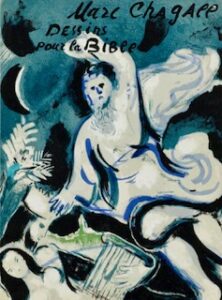
The 1960 Chagall Bible: Drawings for the Bible
The second volume, titled Dessins pour la Bible (French) or Drawings for the Bible (English) were published in 1960 as Verve Number 37/38 and distributed by Zwemmer for Great Britain and Harcourt Brace for the USA. The book features an expanded inventory containing a total of forty-eight original lithographs. This book splits its graphic output perfectly down the middle, containing twenty-four full colour lithographs alongside twenty-four black and white lithographs. The colour portion consists of twenty-three full-page internal narrative illustrations alongside one dominant front cover design. The twenty-four monochrome lithographs serve as deep, text-free reverse-side compositions that complete the poetic narrative structure of the book. Alongside these original lithographs, the 1960 volume includes ninety-six high-quality photo-mechanical reproductions of independent biblical drawings Chagall executed during his peak creative years of 1958 and 1959. Chagall’s signature dreamlike geometry breaks the composition into fragments of pure light and motion. It sets an optimistic, celebratory tone for the entire secondary suite of lithographs. Here is the list of the original colour lithographs:-
 
Creation (The Cover)
The front cover layout introduces the entire collection through a spectacular cosmic vortex of primary colours where Eve emerges seamlessly from Adam’s side amidst a joyous celebration of animals, floating fish, and angels that represents the messy, fertile dawn of existence. I am drawn to this image because it feels like I am witnessing the very first second of existence, where wild, exploding shapes and glowing colours burst out of the dark to turn chaotic emptiness into a living world.
 
Adam and Eve and the Forbidden Fruit
Chagall explores the subtle psychological tension of the original temptation by enveloping the first couple in an ominous, swirling green mist that symbolises the seductive yet ultimately destructive nature of their choice in the garden. I like this image as it captures the quiet, suspenseful moment before the fall, where the glowing, vibrant colours of paradise seem to hum with both innocent beauty and hidden danger. The artwork also captures the bittersweet threshold where paradise dissolves into the shadows of the mortal world.
 
Adam and Eve Expelled from Paradise
A darker psychological reality is explored in this poignant depiction of humanity’s original fall. The composition relies on a jarring, sharp transition between lush emerald fields and a dark, empty void. Adam and Eve are shown casting their eyes downward as they are driven forward into an uncertain, difficult world. Their naked forms are rendered with simple, vulnerable lines that emphasise their sudden shame and exposure. The heavy atmosphere of the print perfectly illustrates the immediate, crushing weight of original sin.
 
Cain and Abel
The tragic introduction of human violence is captured through fractured, aggressive brushstrokes and bleeding crimson tones that reflect the chaotic spiritual rupture of the world’s very first act of betrayal and violence. I like this scene as it depicted in a dream-like manner instead of showing a brutal and bloody conflict.
 
Sarai
The matriarch Sarah is depicted with an elegant, quiet dignity that highlights her internal strength and vulnerability during decades of wandering through foreign lands in search of a promised home. I find the appeal in this scene lies in the fact that Chagall portrays Abraham’s wife with a striking, ethereal radiance, using fluid, elegant contours that celebrate her as both a historical anchor and a symbol of miraculous hope. The composition vibrates with a gentle, spiritual intimacy, capturing her serene composure as she navigates destiny in a landscape that seems to softly glow around her presence.
 
Eliezer and Rebekah
The providential meeting at the well is bathed in serene, cool water-blue washes that elevate a simple domestic encounter into a sacred, divinely orchestrated moment of romance and tribal lineage. This image I find likeable because Chagall uses fluid, curving lines to isolate the exact second Rebekah gracefully lowers her water jar to quench the thirst of Abraham’s weary messenger and his camels. The entire composition pulses with a gentle, destined quietude, making a simple act of hospitality look like a monumental turning point directed by a silent, watching sky.
 
Rachel Hides Her Father’s Household Idols
Chagall blends domestic intrigue with ancient biblical history in this clever, narrative-driven print. The matriarch Rachel is depicted with a sly, protective posture as she sits upon the hidden family treasures. Her expressive eyes look outward, capturing the tense suspense of avoiding her father’s frantic search. The warm, golden hues of the tent interior create a secretive, intimate atmosphere for this act of defiance. This artwork is very clever as I think it underscores how individual cleverness and feminine power directly forged the future of Israel’s tribes.
 
Tamar, Daughter-in-Law of Judah
This complex plate utilises deep, shadowy indigo blocks and hidden eyes to navigate a controversial story of survival and desperate familial duty, framing Tamar as a resilient figure demanding her legal rights. I like this image because Chagall treats Tamar with profound empathy instead of criticism, capturing her sharp intellect and unbreakable resolve as she stands boldly in a world that tried to leave her behind.
 
Joseph the Shepherd boy
The youthful innocence of Joseph is celebrated in a vibrant field of pastoral yellow and green, though a faint, hovering shadow in the upper margin subtly hints at the betrayal and slavery awaiting him in Egypt. I like this scene as Chagall captures the vulnerable, pastoral youth by framing the daydreaming shepherd alongside a small deer against a sprawling, fluidly etched landscape. The composition uses swirling, rhythmic lines to suggest that the humble, quiet boy tending his flock is already enveloped by the vast, turbulent destiny of his future dreams
 
The Meeting of Ruth and Boaz
This pastoral romance utilises rich, golden wheat-field tones to celebrate an encounter of profound historical importance. The two figures meet under a radiant sun, their bodies leaning toward one another in mutual respect. Chagall fills the background with symbols of agricultural abundance to mirror the spiritual fruitfulness of their union. The gentle handling of the line work gives the scene a timeless, legendary quality. It frames their marriage not merely as a romance, but as a crucial step toward the lineage of King David.
 
Ruth Gleaning
The inherent dignity of quiet, hard labour is beautifully captured in this focused compositional study. The foreign widow is shown gathering leftover grain from the edges of a field with graceful resilience. Her bent posture is elevated into an act of profound spiritual devotion through the use of soft, luminous light. The vast emptiness of the field around her highlights her vulnerable economic and social status as an outsider. Yet, her serene expression radiates an inner strength that transcends her difficult physical circumstances.
 
Ruth at the Feet of Boaz
This dramatic nocturnal scene uses deep indigo and midnight blue inks to convey intense emotional vulnerability. Ruth is shown resting quietly at the feet of her protector under the cover of a star-filled sky. The composition relies on soft shadows and contrasting highlights to create a sense of sacred intimacy and trust. A guardian angel hovers subtly in the upper margin to signify divine approval of her modest actions. It masterfully captures a tense moment of hope, legal redemption, and mutual commitment in the dark.
 
Boaz Awakes
The sudden realisation of love and spiritual responsibility is visualised through warm, glowing tones that pierce the midnight shadows, showing Boaz waking to accept his destiny as Ruth’s protector. I can connect with this scene as the dramatic midnight-blue sky framing Boaz’s quiet astonishment perfectly captures the breathless, intimate moment where a simple human encounter feels entirely guided by fate.
 
Naomi and her Daughters-in-Law
The heavy burden of shared female grief and family displacement is beautifully expressed through the leaning, closely bound postures of the three women as they stand at a painful crossroads between two worlds. I admire this image for the tender, sorrowful embrace of the three women beautifully captures the raw emotional weight of shared grief and the fierce loyalty that binds them together on their journey.
 
Hagar in the Desert
This tragic story stands out across the entire volume due to its intensely desolate, minimalist composition. The rejected mother and her young son are placed within a vast expanse of blinding, unforgiving yellow light. The burning sky seems to press down upon Hagar as she wanders aimlessly through the barren wilderness. Her protective gesture toward her child emphasises her deep maternal despair and lack of human support. This image melts my heart as it is a heartbreaking and very visual exploration of absolute isolation, abandonment, and survival against all odds.
 
Samson and the Lion
The legendary judge’s immense physical strength is balanced by a fluid, dreamlike geometry that transforms a violent, mortal combat into a grand, symbolic dance of spiritual empowerment.  This is image is appealing as Chagall replaces a traditional, bloody war of muscles with a floating, zero-gravity dance where hero and beast seem to share the same wild, sacred spirit.
 
Samson and Delilah
The dangerous intersection of forbidden romance and political betrayal is explored through a rich, velvety crimson palette that perfectly mirrors the seductive, heavy atmosphere of Samson’s ultimate undoing. I like this lovely romantic scene as the lovers are wrapped together in a soft, floating embrace that appears peaceful and private. The rich, velvety red and deep midnight blue inks create a warm, candle-lit atmosphere that feels more like a sacred dream than a historical tragedy. By adding a gentle guardian angel floating directly above their heads, Chagall shifts the focus away from human guilt and elevates the scene into a timeless monument of love and vulnerability.
 
Saul and David
The tragic contrast between a failing, melancholic king and a rising young musician is captured through contrasting colour temperatures, showing David’s cool blue harp music attempting to soothe Saul’s fiery, darkening spirit. I enjoy looking at this image as it perfectly captures how the power of music can heal a broken human spirit. Chagall deliberately splits the image between two opposite moods, placing a young, peaceful David next to a dark, brooding King Saul. By painting David with cool, tranquil blue washes, the artist shows his music acting like a calming wave trying to soothe the king’s fiery, troubled thoughts. Instead of focusing on a royal court or raw political power, the print feels like a deeply quiet, private moment about the heavy emotional weight of mental suffering. The floating, dreamlike quality of the ink lets me feel the music moving across the page, transforming an ancient story into a beautiful lesson on empathy and comfort every time I look at it.
 
David and Bathsheba II
Chagall returns to this famous romance with an entirely fresh perspective, utilising a softer, more reflective wash of twilight tones to emphasise the lingering sorrow and inevitable consequences of their forbidden choices.
I think this image is one of my favourites as it stands out because Chagall completely strips away the grand, royal opulence of the throne room to focus entirely on the quiet, lingering aftermath of their choices. Instead of capturing the initial moment of forbidden passion, the artist bathes the couple in a soft, reflective wash of twilight tones that hints at a deep, shared sense of destiny and inevitable sorrow. The two figures are cradled together in a gentle, weightless embrace, looking less like powerful monarchs and more like two fragile souls weathering a great spiritual storm together. By framing their faces with deep indigo and cool nocturnal shades, the lithograph creates a private sanctuary where human vulnerability and divine judgement quietly coexist.
 
Wise Solomon

The legendary king is portrayed seated upon his throne in a deeply meditative state, wrapped in rich emerald and gold tones that signify that true leadership relies on inner spiritual wisdom. I admire this image because Chagall chooses to celebrate the king’s brilliant mind and inner peace rather than his gold or royal power. Instead of drawing a stern ruler sitting on a high throne, the artist paints Solomon with his eyes closed in deep, quiet meditation. The beautiful mix of deep emerald greens and warm golds creates a calm, glowing space that makes you feel like you are looking at a private moment of deep thought. The soft, curved lines of the king’s robe and the floating angel above his head give the image a dreamy, magical quality that feels completely detached from the stresses of the real world. It is a deeply comforting image because it shows that true leadership and strength come from finding quiet, inner wisdom rather than showing off wealth.

Esther
This regal lithograph radiates with intense, jewel-toned colour blocks that celebrate the bravery of the young queen. Esther is dressed in rich royal attire, her external beauty highlighted by brilliant fields of pink and gold. However, her clasped hands and tense, praying posture reveal the immense internal courage required for her mission. She prepares to risk her life by approaching the king when uninvited to save her people from destruction. The balanced structure of the plate reflects her steadfast determination and moral clarity in standing alone against a very powerful empire.
 
Job in Despair
The profound, unanswerable brokenness of human suffering is explored in this raw and unsettling composition. Job is shown twisted in physical and emotional agony upon the bare, dark earth. His expressive, anguished face is turned toward the sky to question the ultimate fairness of his heavy trials. In the margins, his comfortless friends look on with rigid, unyielding postures that offer no genuine solace. The chaotic, fractured line work mirrors the total collapse of Job’s physical world and health.
 
The Prophecy of Isaiah
The nature of visionary foresight shifts to a cosmic perspective in this swirling, ethereal composition that shows the great prophet surrounded by a vortex of heavenly figures halfway between earth and heaven. I like this image because the contrast between the dark, moody blue background and the bright yellow light perfectly captures the magical feeling of a divine secret being revealed.
 
The Face of Israel
Acting as a complex visual summary, this final print serves as a dreamlike tapestry of cultural memory. Chagall weaves together portraits of kings, sacrificial goats, weeping mothers, and burning candles into a single unified vision. The deep reds and vibrant blues clash and blend to represent centuries of joy and historical suffering. It honours the enduring spirit of Jewish survival, faith, and hope through generations of displacement. This masterpiece provides a fitting, deeply personal conclusion to Chagall’s lifelong obsession with the biblical narrative.
Which Chagall Bible Is More Sought After?
The initial 1956 publication, Illustrations for the Bible, maintains a significantly higher market desirability because it serves as the ultimate culmination of Chagall’s historic twenty-five-year creative journey. This first book holds a superior standing among fine art collectors because it contains the absolute most iconic, foundational milestones of the Old Testament narrative, such as the widely celebrated depictions of The Angel and the dramatic Moses sequence. By contrast, the 1960 companion volume, Drawings for the Bible, focuses on secondary biblical themes and characters that Chagall had initially skipped over during his primary research trips to the Middle East in the 1930s.
 
On the open UK art market, completely intact bound copies of the 1956 volume routinely command a premium price at major houses like Bonhams. A copy sold for £3,000 in March 2026 often fetching more than the later 1960 edition.
While the second book technically offers a larger quantity of internal colour plates for dealers to break apart, the sheer art-historical importance and visual power of the 1956 compositions ensure it remains the true holy grail of mid-century publishing history.
 
A copy of the 1960 version sold for £1,100 at Forum Auctions, London in June 2026 through the Saleroom. Obtaining a deluxe signed copy where all the lithographs are signed and numbered greatly increases the value enormously.
Scroll to Top