
Prisoner of West Egg
How Gatsby’s Mansion Became a Panopticon
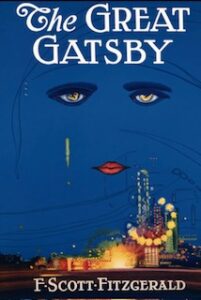
The Book
The Great Gatsby by F. Scott Fitzgerald, published in 1925 by Charles Scribner’s Sons
The author aimed to show Jay Gatsby as a complex embodiment of the ‘American Dream’. A man with grand illusions who would be accepted into a society of which he did not belong. Gatsby’s mansion which he named West Egg embodied that dream and he purchased it to show his wealth to the woman he had obsessed over, Daisy Buchanan, who was from a wealthy aristocratic family in the hope that she would want to be with him.
Prisoner of West Egg: How Gatsby’s Mansion Became a Panopticon
Some critics say that Gatsby’s estate using the principles of Michel Foucault (1926-1984), a French philosopher, historian and social theorist believed that Gatsby’s mansion was designed more like an institution, namely a prison, where Gatsby was the warden and his guests were the prisoners. It was never purchased to be a comfortable home and because he liked the design aesthetically; it was planned like an institution, namely a ‘panopticon’, a term invented by Jeremy Bentham, the English philosopher, social reformer and jurist in 1787. A panopticon is similar to an institution, like a prison, where a one-way surveillance is in operation.
The design features a round building of isolated cells wrapped entirely around a dominant watchtower in the centre. The defining trick of this structure rests in its complete asymmetry of sight. While the inmates are cells are bright due to the large windows this also enables them to be utterly exposed to the watcher on the central tower whilst the guard’s windows are heavily draped in darkness so he cannot be seen, thus they never know when they are being watched so they must behave at all times or face the consequences.
Michel Foucault (1926-1984), a French philosopher, historian and social theorist analysis of a panopticon is that the architectural design serves a singular purpose: to alter behaviour through the permanent visibility of the inmate adding a psychological element to Bentham’s structural element as to how the structure’s design affects the people within it.
Based on Foucault ideology Gatsby’s mansion as a panopticon for the following reasons:
- The forty-acre grounds with a swimming pool acted like the prison grounds where lots of guests crowded around to join in drinking, dancing, swimming and partying around the mansion. The tower with it multi-directional windows allowed for the grounds and across the bay where Daisy lived, to be seen by Gatsby.
- The mansion was a mismatch of different styles and countries from French Renaissance and Gothic Revival to the exterior which was inspired by Hôtel de Ville (Town Hall) in Normandy, France to Rococo and Baroque in the grand music rooms. The huge reception rooms were decorated in the Restoration style favoured by English Royalty. The furniture was opulent in each room to make the styles and these grand rooms echoed when even one person was in the room. Gatsby could see the guests inside and outside the mansion through these huge windows that flood in light. Each room can hold hundreds of people at once. All these huge rooms were show rooms as Gatsby never felt comfortable enough to sit in and enjoy them. He was brought up in a small house on a farm and felt more comfortable in his small bedroom which was kept out of bounds to his guests as this room was not a showroom like the rest of them.
- Gatsby never mingled drank with his guests who just turned up in their droves to drink, enjoy the food he laid out and whom participated in hedonistic fun. He just watched the guests enjoying themselves as he passed through the house and grounds. These strangers just turned up to enjoy his open house hospitality. They didn’t know what Gatsby looked like so they didn’t t need to act in a different way when he around as they didn’t know when he was around them. Gatsby was the one who was trapped in his own prison with onlookers looking in. When he is alone in mansion he is trapped as he has to keep up a pretence that is fake as he was brought up in poverty and didn’t know how to live in such a grand mansion. He had hoped that Daisy would see the bright lights and hear the jazz band and other musicians he had hired to get Daisy’s attention. The grandness was all a pretence making him the trapped one whilst his visitors had a wail of a time.
- He was not the Oxford educated aristocrat that he tried to pretend he was he faked his new identity when he was 17 years old as he was ashamed of roots and felt trapped, He had big romantic dreams of becoming wealthy and glorified by people. He watching ordinary people enjoying themselves whilst he was working hard pretending to be someone he wasn’t. Having hundreds of people partying at your house and grounds would alert Daisy that Gatsby had big money so her family would accept him. He had no intention of making friends with these strangers whom he splashed out on every Saturday. Gatsby does not drink or dance or join in with these people in any way yet they are free to take over the ground floor of his house trailing dirt, maul the expensive furniture and break glasses and such for he doesn’t care it means nothing to him apart from a means to draw Daisy’s attention.
- He lied about his wealth to Daisy as he told her that he inherited his money from a very wealthy relative when in fact his money came from criminal deeds. He needed to constantly keep up with the lies when questions were asked about his background by Daisy which made him a prisoner to himself. By making Daisy think his family were from the generations down were rich, like hers were, he could win her and her family over. He needed her family’s approval as they would have forbid the marriage in order that could bridge the class divide.
- Drinking illegal alcohol and dancing away under the lights thousands of total strangers inundate his gardens and rooms like am amphitheatre filled with noise whilst Gatsby remains quiet and alone in his thoughts. The mansion is a chaotic amphitheatre of noise, but Gatsby’s internal world is a quiet, stagnant vacuum of longing. The house is loud, but he is silent; the house is crowded, but he is entirely alone.
The irony of Jay Gatsby’s mansion and grounds culminates in the fact that he never once uses his grand swimming pool until the very afternoon of his death. Within the architecture of a panopticon, the prisoner does not freely enjoy the prison yard like his uninvited guests did. Everything he owned was treated as a theatrical prop designed to project a specific impression to the watchtower.
Consumed with managing his performance and policing his public image Gatsby could not step out of character to experience personal pleasure himself as he was trapped in his fake identity till the day he died.
The Value of The Great Gatsby First Edition
Christie’s, New York estimated a first printing on the Great Gatsby with a third state dust jacket at $20,000=$30,000 on the 13th October 2026. It sold for more than double the estimate at $76.800. The dust jacket itself is exceeding rare as many people saw them as a protective wrapper that was placed on them mainly for during transit. so took them off upon acquiring the book. The first print run was 20,870 copies. A copy inscribed to a friend without the dust jacket was estimated to be worth £200,000-£300,000 in September 2023 by Christie’s, London. It sold for £226,800. An unsigned first printing with a first issue dust jacket was estimated by Christie’s London at £100,000-£150,000 in September 2023. The hammer price on the day was £100,800 despite some flaws and a gift inscription (not author).